
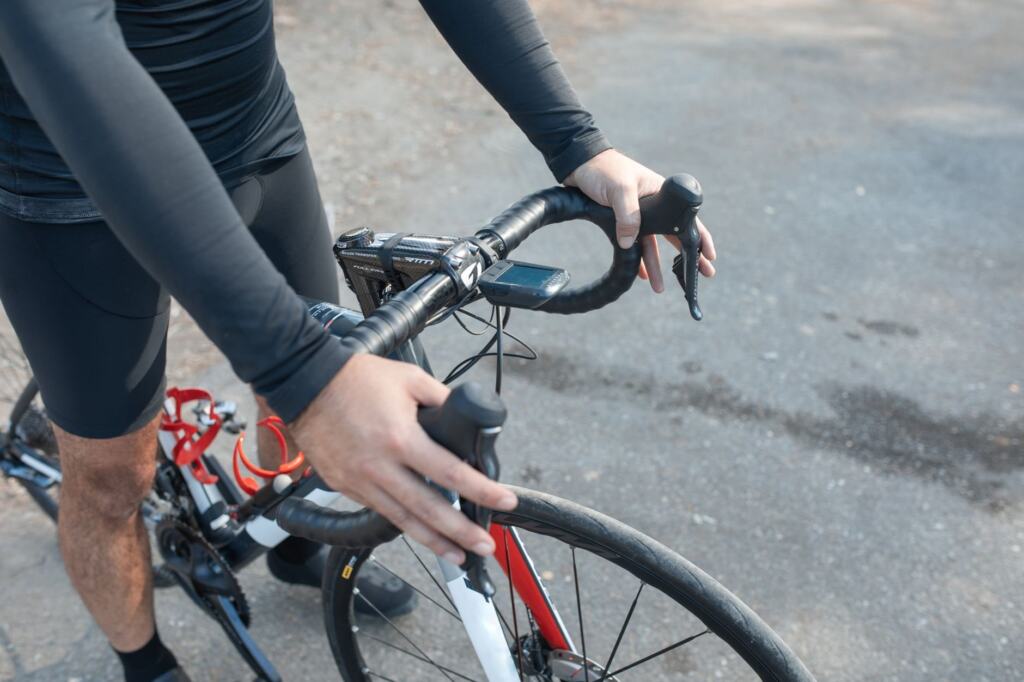
The best bike camera for incident reporting is a dedicated safety unit with loop recording and a built-in light, ideally front and rear. Action cameras suit sport footage, but short battery life can rule some out as safety cameras.
The picks below are ordered by fit for incident reporting, not by a measured league table. They sit alongside the wider range of cycling gadgets that can make a commute safer.
What makes a bike camera useful after an incident
A bike camera earns its place when it records without you touching it and leaves usable evidence. Cycling UK’s group test says safety cameras need looping footage that automatically captures crashes. It also notes that one of the first questions the police will ask after a road incident is whether you have video footage.
Three criteria drive the choices below:
- Loop recording: the camera keeps recording on its own, so a crash is captured even if you never pressed record.
- Light function: a camera that doubles as a front or rear light saves a mount, but the trade-offs on output and price matter.
- Evidence value: Cycling UK judges 1080p good enough for most safety incidents, where number plate visibility is the key aspect. Sharp plates matter more than a bigger resolution figure.
Action-sport footage quality, such as stabilisation and frame rate, is a secondary criterion here. The sections that follow start with purpose-built safety cameras and then cover action cameras.
Dedicated safety cameras
Purpose-built safety cameras are designed around continuous recording rather than short clips. For incident reporting they are the most direct fit.
Cycliq Fly12 Sport and Fly 12 CE (front)
Cycliq’s product range pairs a front-facing Fly12 Sport with a rear-facing Fly6 Pro, and the brand describes the camera as providing a record of what was visible. The front camera suits riders who want a light and a camera in one unit.
Cycling UK’s group test lists the Fly 12 CE as a front light and safety camera with a maximum output of 600 lumens. It reports a runtime of around two hours in the max power and constant camera setting. The lighter Fly 12 Sport has a 400-lumen light.
The limitation is evidence quality. The same test found you would be squinting and zooming to decipher number plates even five metres away on the Fly 12 CE. It also found you can only view the videos by downloading them to a PC. That suits a rider who reviews footage at a desk. It is less convenient for anyone who wants to check a clip at the roadside.
Cycliq Fly6 Pro (rear)
Cycliq describes the Fly6 Pro as a rear-facing camera that is always watching your back. Its Ultimate Safety Bundle pairs front and rear units with continuous recording and smart incident detection. That is the closest match to the loop-recording-plus-incident-capture brief in this list. It suits riders who commute on busy roads and want both directions covered with one brand’s mounts and software.
Garmin Varia RCT715 and the Varia Vue line
Garmin’s Varia Vue range builds a camera into a radar tail light, and the RCT715 shows what that format involves. Cycling UK describes it as combining a warning radar, a 65-lumen rear light and a 1080p safety camera, at a list price of £299.99. Runtime is less than 90 minutes in constant mode.
It suits riders who want one rear unit that warns of approaching traffic, lights the bike and records. The trade-offs are cost and runtime. The seatpost-only mount may also rule out use of a saddlebag, so check how you carry luggage first. Our best bike radar guide covers the radar side of this format in more depth.
Action cameras on a bike
Action cameras give strong footage for sport and can serve as bike cameras, but battery life is the pressure point for everyday safety use.
- GoPro Hero 10: Cycling UK calls it tough, with a waterproof design, excellent image stabilisation and simple menus. Its 80-minute Enduro battery life is judged reasonable. It suits riders who want one camera for rides and sport.
- Insta360 GO 2: battery life is short, which Cycling UK says rules it out as a safety cam. Choose it for casual clips, not for incident recording.
- AdventureView: a buying guide from Extreme Hodophile lists up to 90 minutes of 1080P recording on a single charge, with MicroSD cards up to 128GB.
The same guide says smooth 1080P at 60 frames per second can beat 4K for fast sport. For a bike camera that means a higher resolution is not automatically better footage. Whichever you pick, the battery sets how long a ride you can cover. If a commute outlasts the runtime, the camera stops before you arrive.
Loop recording and MicroSD storage
Loop recording matters because crashes are unplanned. Cycling UK says safety cameras need looping footage that automatically captures crashes, and Cycliq pairs continuous front and rear recording with smart incident detection.
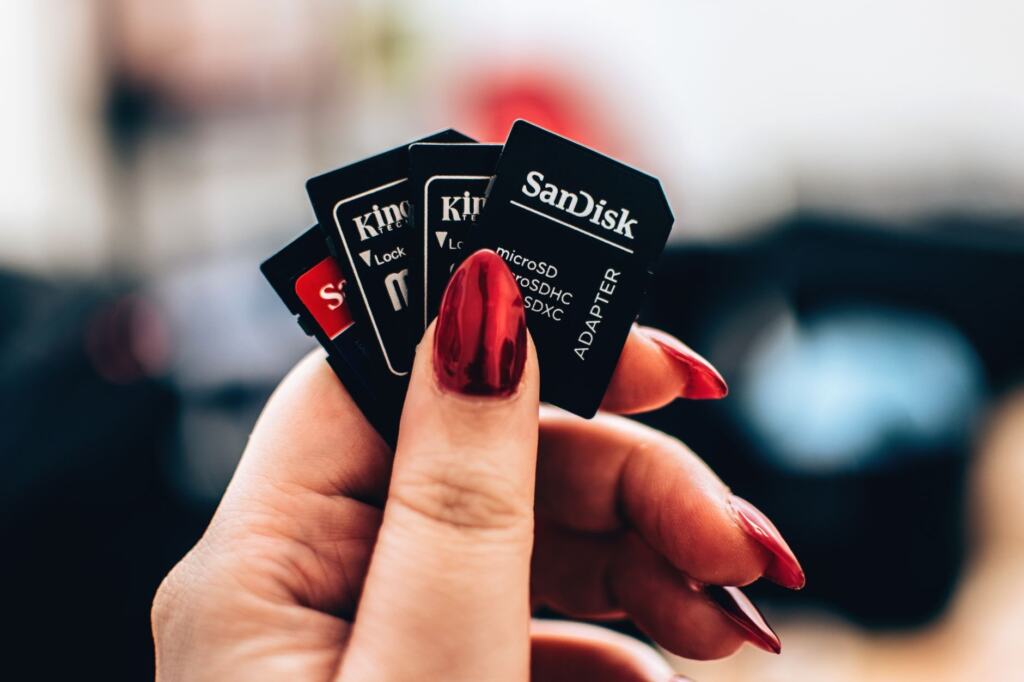
Storage depends on the MicroSD card the camera accepts. The Extreme Hodophile guide notes that several of the action cameras it covers take MicroSD cards up to 32GB. It says the AdventureView, which accepts cards up to 128GB, is the better fit for long 4K sessions. Check the maximum card size before buying, because it sets how much footage you can hold between downloads.
Bike cameras with a built-in light
Yes, a bike camera can double as a light, and several units do. The Cycliq Fly 12 CE front light reaches 600 lumens at maximum, the Fly 12 Sport offers 400 lumens, and the Garmin Varia RCT715 has a 65-lumen rear light, all per Cycling UK’s group test.
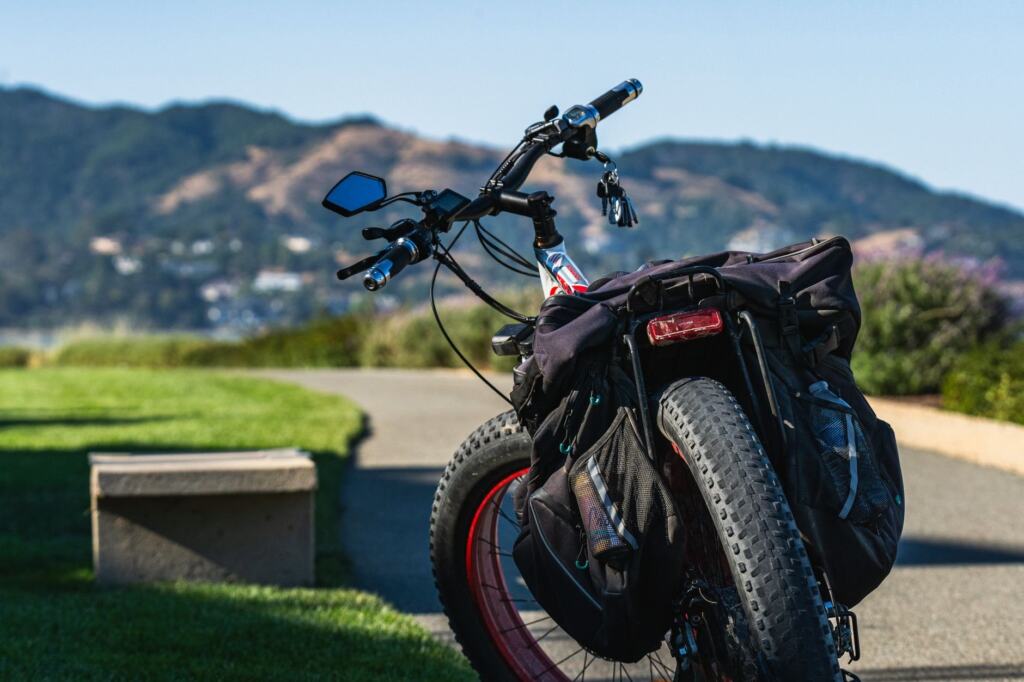
Combined units come with a caveat. Cycling UK says they are often more expensive and lower in performance than separate items. A combined unit suits riders who want fewer things to charge and mount. If you already own a bright light, a separate camera may give better value.
A buying guide from Mount and Lens compares rear camera options on radar, battery life and night vision. Those are worth weighing against light output when the rear unit does several jobs.
Is a front and rear setup worth it?
A front and rear pair is worth it when incident reporting is the goal, because the two cameras between them give a record of what was visible ahead and behind. Cycliq sells exactly this pairing, with continuous recording and smart incident detection across both units.
The cost is the main objection. A combined rear unit such as the Garmin Varia RCT715 lists at £299.99 on its own, and Cycling UK warns that combined units can cost more and perform less well than separate items. Riders on quiet roads or short rides may reasonably start with a single front camera and add a rear one later.
Reviewing footage and using it as evidence
Footage is useful evidence only if you can retrieve it and read it. Cycling UK reports that police ask early on whether you have video, and Cycliq says its camera provides a record of what was visible. Whether a given clip is accepted or acted on is a decision for the police and others handling the report.
What you can control is clarity and access. Number plate legibility matters more than a headline resolution figure, and some cameras only let you review clips by downloading to a PC. If you want to check footage quickly after an incident, look for a camera with a phone app.
Comparison at a glance
| Camera | Type | Light and video | Battery or storage | Planning use |
|---|---|---|---|---|
| Cycliq Fly 12 CE | Front light and camera | 600 lumens maximum | Around two hours at max power, constant camera | Light and camera in one; plate clarity is a weak point |
| Cycliq Fly 12 Sport | Front light and camera | 400 lumens | Lighter than the Fly 12 CE | Choose for lower weight |
| Garmin Varia RCT715 | Rear radar, light and camera | 65-lumen rear light, 1080p | Under 90 minutes in constant mode | List price £299.99; seatpost-only mount |
| GoPro Hero 10 | Action camera | Waterproof, excellent stabilisation | 80 minutes Enduro battery | Best for sport footage; modest runtime |
| Insta360 GO 2 | Action camera | Not a safety light | Short battery life | Ruled out as a safety cam |
| AdventureView | Action camera | 1080P recording | Up to 90 minutes at 1080P; cards up to 128GB | Larger card suits long sessions |
Figures come from Cycling UK’s group test and the Extreme Hodophile action camera guide.
Choosing the right camera
- Choose a Cycliq front and rear pair if you want continuous recording with incident detection and are happy to review clips on a PC.
- Choose the Garmin Varia RCT715 route if rear radar, a rear light and a camera in one unit matter more than price or saddlebag use.
- Choose an action camera such as the GoPro Hero 10 if sport footage and stabilisation come first, and accept a battery that will not cover a long day.
- Skip the Insta360 GO 2 for safety use, because Cycling UK says its short battery life rules it out.
If theft is also a worry, pair your camera choice with the best bike gps tracker options.
Frequently asked questions
How long does a bike camera record on one charge?
Runtimes in Cycling UK’s group test run from 80 minutes on the GoPro Hero 10 Enduro battery to around two hours on the Cycliq Fly 12 CE at max power. Lights, camera mode and radar all draw on the same battery.
Is bike camera footage accepted as evidence?
Cycling UK says police commonly ask for video footage after a road incident. Acceptance depends on the case and on how clearly the footage shows what happened, particularly number plates.
Are bike cameras waterproof?
The GoPro Hero 10 has a waterproof design per Cycling UK. In the Extreme Hodophile guide, three cameras state a depth of 30 metres, while the AdventureView is listed as waterproof without a depth figure.
Do I need 4K for a bike camera?
Not for safety use. Cycling UK says 1080p is good enough for most safety incidents. In fast sport, Extreme Hodophile notes that 1080P at 60 frames per second can look smoother than 4K.