
| Situation | Pick | Key specs | Planning use |
|---|---|---|---|
| Road and shared paths | Bose Sport Open Earbuds | Open design, ear hooks, IPX4, about 9 h per charge | Choose when hearing traffic and other path users matters most |
| Hard sessions, secure fit | Beats Powerbeats Pro | Ear hooks, IPX4, 9 h per charge | Choose for intervals and rough running where the buds must not shift |
| Light and low-cost | KORAVIS Q1 | 18.2 g, IPX5, 8 h, $9.98 | Lowest price and lightest weight listed here; covers a training week but not a week plus a long run |
| Long runs and wet weather | KORAVIS M2 | 25.5 g, IPX6, 12 h, $15.18 | Highest water rating and joint-longest playtime of the group |
| Long runs, alternative | KORAVIS M3 | IPX5, 12 h, $15.98 | Same playtime as the M2 with a lower water rating |
Playtime, ratings, weights and prices for the KORAVIS models come from the maker’s running Bluetooth headphones guide; the Powerbeats Pro and Bose figures come from an earbud running roundup.
The best running headphones depend on where you run: open-ear designs keep traffic audible, hooked earbuds stay put on hard sessions, and light budget pairs suit a normal training week. Choose by awareness and fit first, then battery.
Each pick below sits in a situation, and all of them belong to our wider running gadgets coverage.
Road and shared-path running
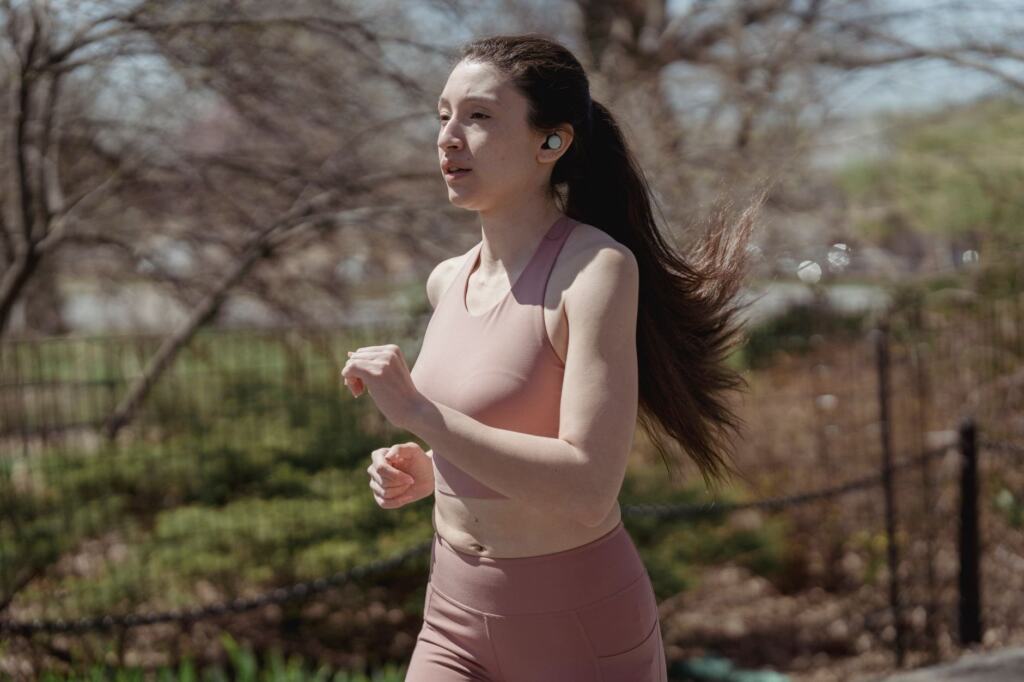
Open-ear designs, whether bone conduction or air conduction, leave the ear canal open so you hear what is around you. That makes them the natural starting point for anyone who runs beside cars, cyclists or other path users.
Bose Sport Open Earbuds
The Bose Sport Open Earbuds pair an open design with ear hooks, and carry an IPX4 rating. Battery life is about 9 hours per charge. They suit road runners who want to keep hearing their surroundings and who run in sweat and light rain rather than downpours.
The limits are the water rating, which is the lowest tier in this list, and the nature of open-ear sound: music is less isolated than with a sealed bud, so noisy roads can compete with it.
Open-ear or in-ear near traffic
Open-ear headphones are the better choice outdoors when awareness is the priority, but the benefit has a condition. At high volume, open-ear designs attenuate outside sound too, so the advantage holds at moderate volume only. Running with any headphones near traffic is therefore a volume decision as much as a hardware one.

- Choose open-ear if you run on roads, crossings or mixed-use paths and are willing to keep the volume moderate.
- Choose in-ear with transparency mode if you want a sealed fit most of the time. One Bang & Olufsen sport earbud, for example, lets you vary ambient sound between off, low, medium and high.
- Keep one ear free or pause the music at busy junctions if you use a sealed design; transparency mode narrows the gap but does not remove it.
Secure fit for hard sessions
Fit decides whether a pair is usable on a run at all. A bud that shifts or drops during intervals becomes a distraction within minutes.
Beats Powerbeats Pro
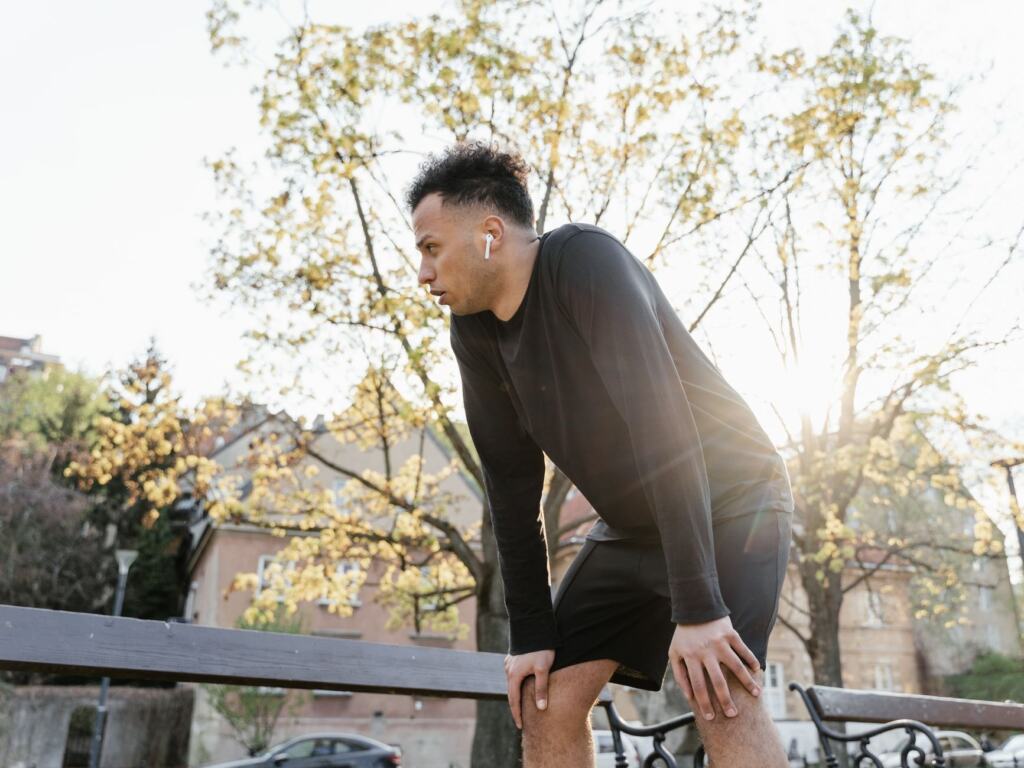
The Powerbeats Pro rely on ear hooks: the hooks keep each bud in place during tough jogs. They are rated IPX4 and last 9 hours per charge. They suit runners who prioritise stability over a minimal feel, though IPX4 means sweat and rain are the limit and submersion is not.
What keeps earbuds from falling out
The supported fix is a physical anchor. Models with a band or ear hook stay put, while loose earbuds often do not. Use that as your first filter, ahead of sound quality or price.
- Prefer hooks or a band for intervals, hills and trail running, where head movement is greatest.
- Treat loose buds with caution if you run fast; they may suit easy runs better.
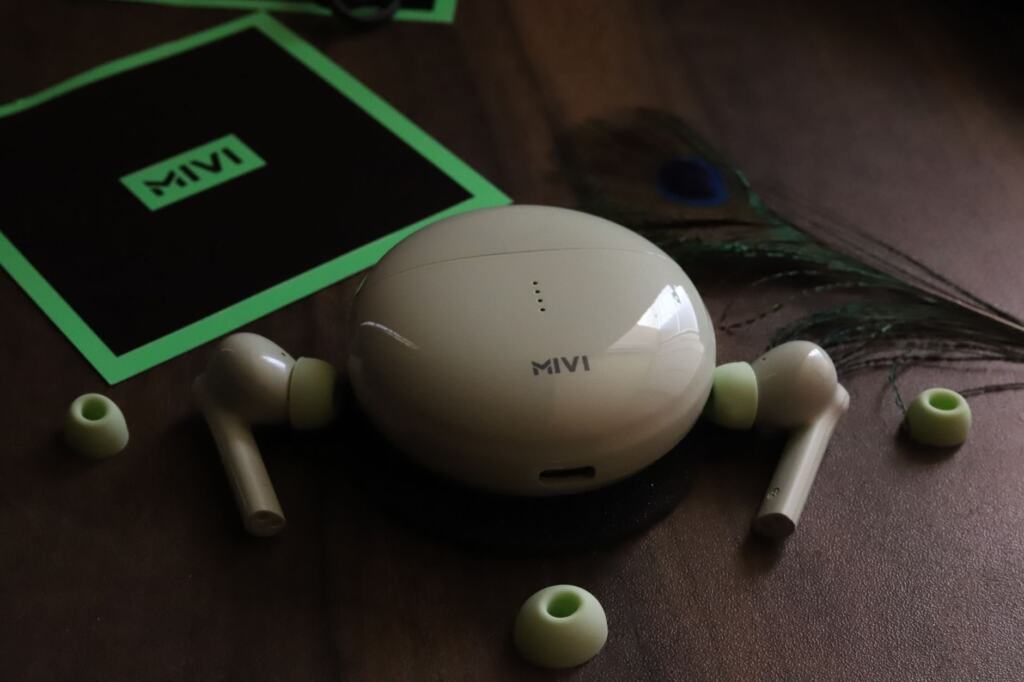
- Check spare tips where a pair includes them, as in the pictured set, and compare how the bud feels after a short jog before committing.
Light and low-cost picks
KORAVIS Q1
The KORAVIS Q1 weighs 18.2 g, is rated IPX5, runs for 8 hours and lists at $9.98, all per the maker’s running guide. It suits runners who want the lowest price and the lightest weight here. Eight hours covers a typical training week, so it falls short if you add a long run to that week.
Why weight matters
Weight is felt on the cheekbone, and under about 26 g most people stop noticing a headphone within an hour. The lightest frames come in around 18 g. Treat that as a comfort guide rather than a rule: a heavier pair with a secure hook can still feel better than a light one that moves.
Long runs and wet weather
KORAVIS M2
The M2 offers 12 hours of playtime, an IPX6 rating, a weight of 25.5 g and a $15.18 list price, according to the maker’s guide. Its weight sits just under the comfort threshold. IPX6 means the water test uses a 12.5 mm nozzle at about 100 L/min, a harder jet than IPX5 faces. It suits long-run and wet-climate runners, and it is the stronger value of the KORAVIS pair on the listed figures.
KORAVIS M3
The M3 matches the M2’s 12 hours but is rated IPX5 and lists at $15.98. Choose it only if the M2 is unavailable or its fit does not suit you, since the water rating and price both favour the M2.
Battery in real conditions
Eight hours covers a week of training, and 12 hours covers a week plus a long run. Use that to pick a tier. Then allow for conditions: real-world playtime typically lands at 70–80% of the stated number at high volume or in the cold, and lithium cells lose capacity below about 10 °C. On winter long runs, the 12-hour models leave more margin than the 8-hour one.
If you train by effort as well as time, our guide to the best heart rate monitor for running covers the other sensor worth planning around.
Reading IPX ratings against sweat
An IPX rating describes a laboratory water test, and each digit is a different test. The test conditions for the ratings you will meet in this list are:
- IPX4: an IPX4 designation indicates water resistance, meaning sweat and rain are handled but submersion is not.
- IPX5: water jets from a 6.3 mm nozzle at about 12.5 L/min, with dust not rated.
- IPX6: a 12.5 mm nozzle at about 100 L/min.
- IPX7: submersion to 1 m for 30 min.
Read the digits separately. IPX6 beats IP55 on water because its water digit is higher, while IP55 adds a dust rating that IPX6 does not claim. The tests also use clean water. Sweat is salty and mildly acidic, and it attacks charging contacts, so a rating is a floor for your runs, and the contacts are the part to watch.
Frequently asked questions
| Question | Answer |
|---|---|
| How long does the battery last on a long run? | The KORAVIS M2 and M3 are listed at 12 hours, the Q1 at 8 hours, and the Powerbeats Pro at 9 hours on a single charge. Expect less in cold or at high volume. |
| Do open-ear headphones leak sound? | At high volume, leakage is moderate for open-ear designs, with bone conduction leaking least, and low for in-ear. Others nearby may hear loud music. |
| Does a higher Bluetooth version improve running sound? | Not by itself. Bluetooth 5.2 introduced the foundations for LE Audio, which can improve battery efficiency, but codec support, antenna design and multipoint change your experience more. |
| Is IPX7 needed for running? | No. IPX5 resists water jets from any direction and covers sweat and rain comfortably. IPX7 adds a submersion test that matters only if the buds might be dunked. |